traditional chinese medicine Utilizes traditional techniques that produce measurable improvements to body and mind

One of the key components of Traditional Chinese Medicine, acupuncture is a treatment that has been employed for nearly 3,000 years. Recognized by the World Health Organization, W.H.O., as an effective modality in many health aspects, acupuncture has also been adapted by Contemporary Medicine society as "Medical Acupuncture", the Physical Therapy society as "Dry Needle Technique", and even by the military as "Battlefield Acupuncture". Although there is no single universally accepted doctrine that explains how acupuncture works, the effects of acupuncture are undeniable.
Acupuncture

Herbal medicines have been around for over 3,000 years and are as ancient as the practice of acupuncture in China. Formulas of these herbal medicines are specific combinations from over 500 individual premium herbs, minerals, and in some cases, animal products.
It is important to note that herbal formulas can be mildly toxic if created or consumed improperly without proper understanding. The complexity of the herb’s functionality and its potential toxicity has resulted in government regulation such that only board-certified herbal medicine practitioners can prescribe the herbs. Our practitioners are all board-certified and highly experienced in prescribing herbal medicines while guaranteeing a safe and effective treatment.
chinese herbal medicine

tui-na
An ancient Chinese manual therapy. Tui stands for pushing, and Na stands for grabbing. Tui-Na actually consists of many different maneuvers. Other than “pushing” and “grabbing”, there is also “rolling”, “kneading”, “brushing” and “rubbing”, among many others. Different from the western massage, Tui-Na works on the meridians and acu-points. In a sense, Tui-Na is actually a different form of acupuncture. Unlike the western massage, Tui-Na treatments are not always “soothing” or “relaxing”. Some treatments can be slightly vigorous, and therefore, patients may feel sore after a Tui-Na treatment.
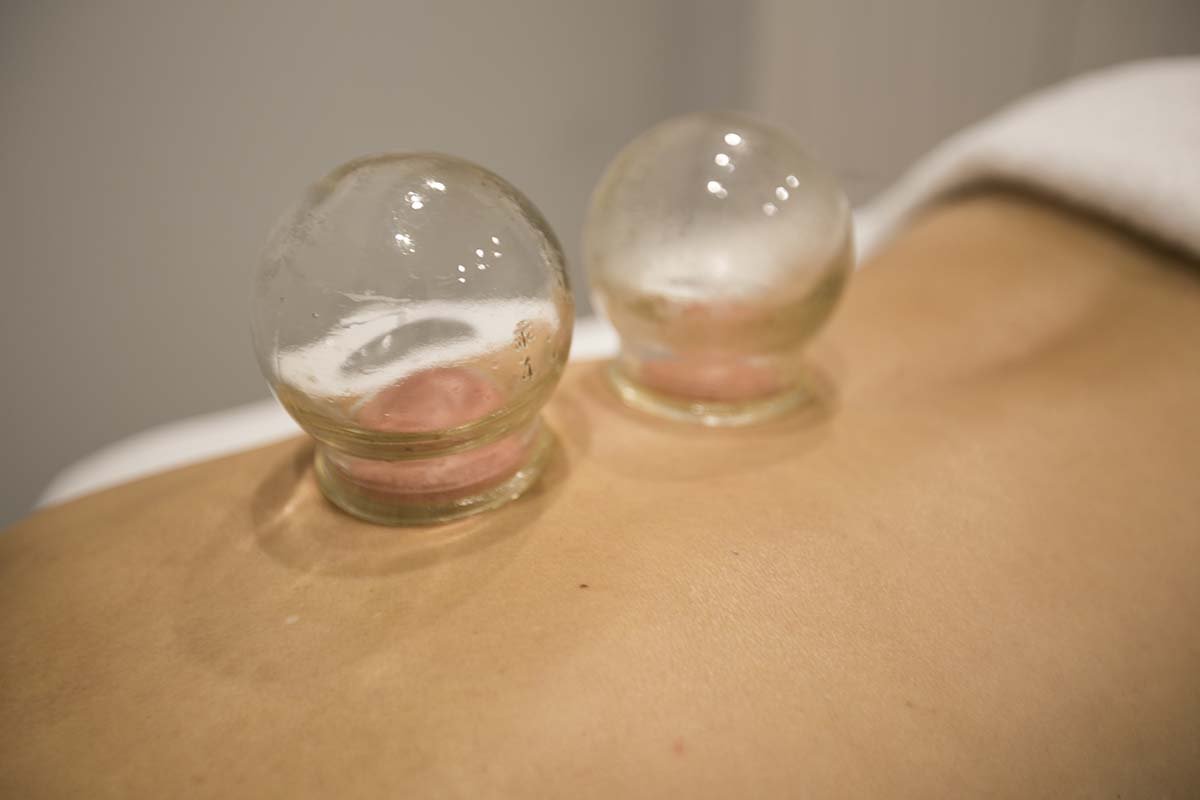
cupping
Cupping is an ancient Chinese medical technique that applies suction force to an area to enhance the local circulation. By increasing circulation, the accumulated stagnant metabolic wastes within the area are “washed off”. Sometimes cupping is combined with a treatment called bloodletting to treat acute sprains and to relieve the associated blood stasis.
Significantly deficient patients or those with poor skin conditions are not suitable for cupping treatments.
LATEST featured BLOGs